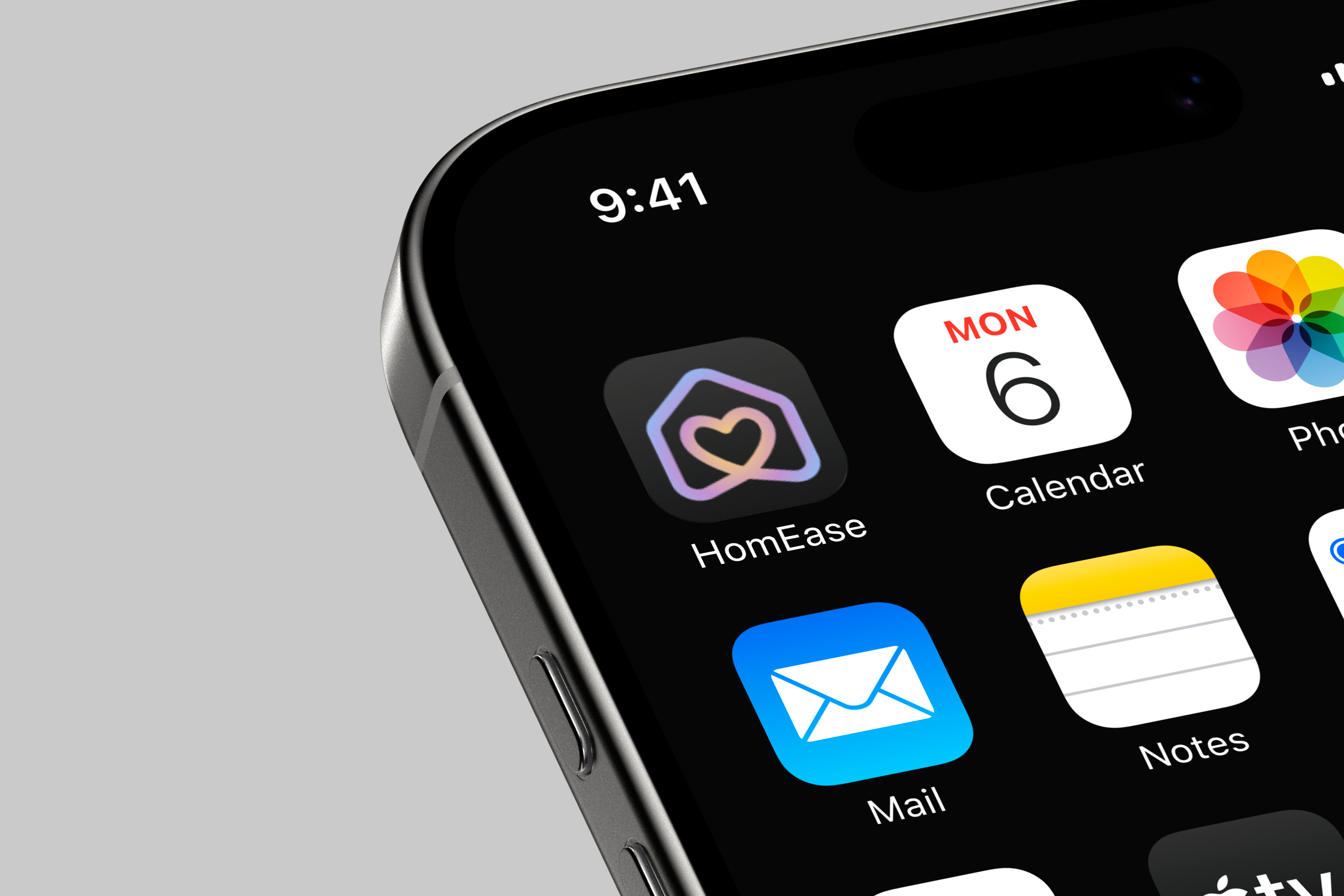
HomEase: Shared living app with 80% perceived conflict reduction
Mobile application simplifying roommate communication and organization for smoother shared living.
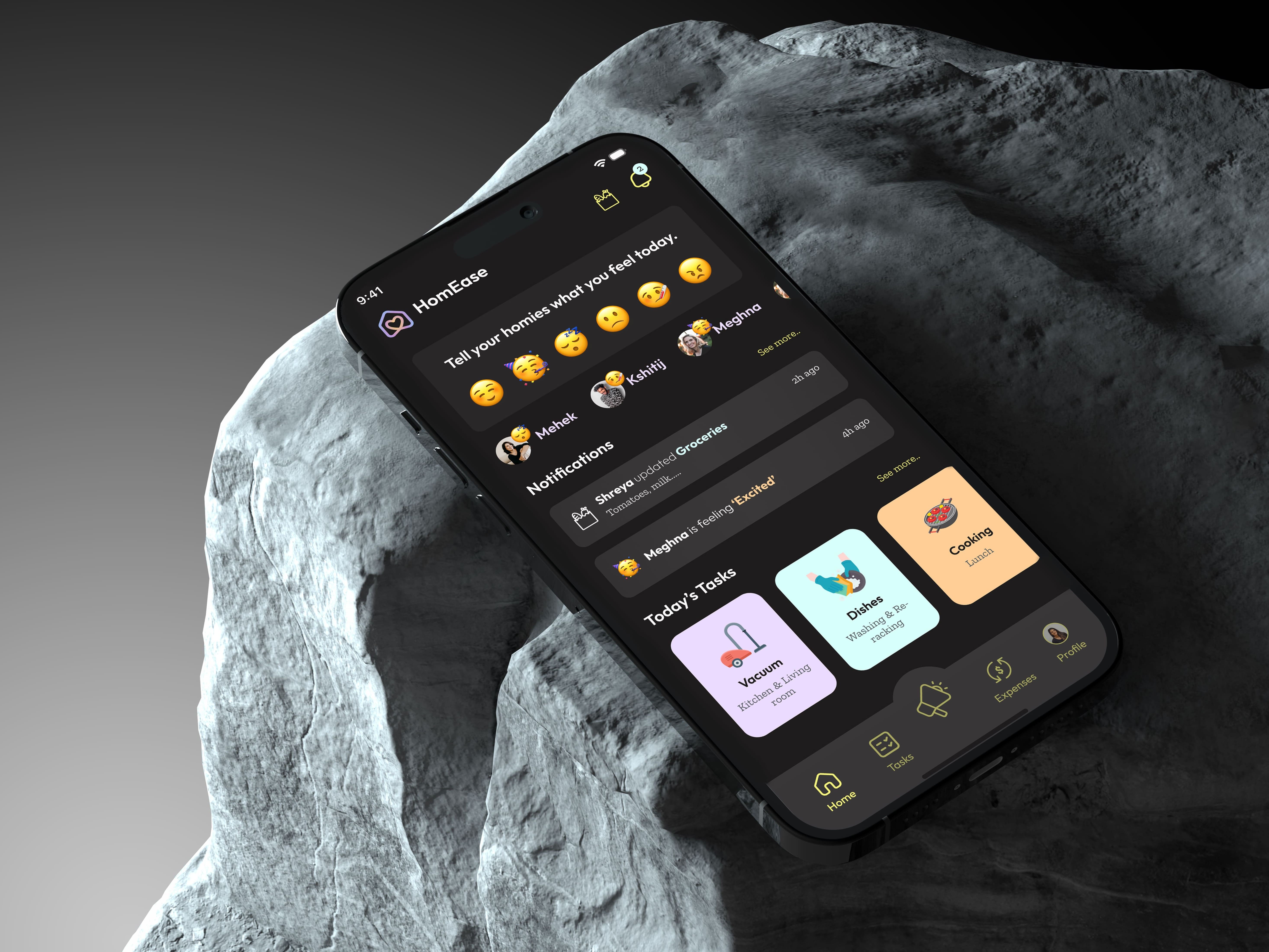
Living in shared housing can be a challenge, and HomEase is a step towards fixing that.
- User Interviews
- Feature development & Ideation
- Sketching & Prototyping
- User testing
At A Glance
We interviewed 8 students and found that roommate issues came from poor communication, not bad choices.
From these insights, we mapped key patterns, built personas, and shifted our focus to improving how roommates manage shared living.
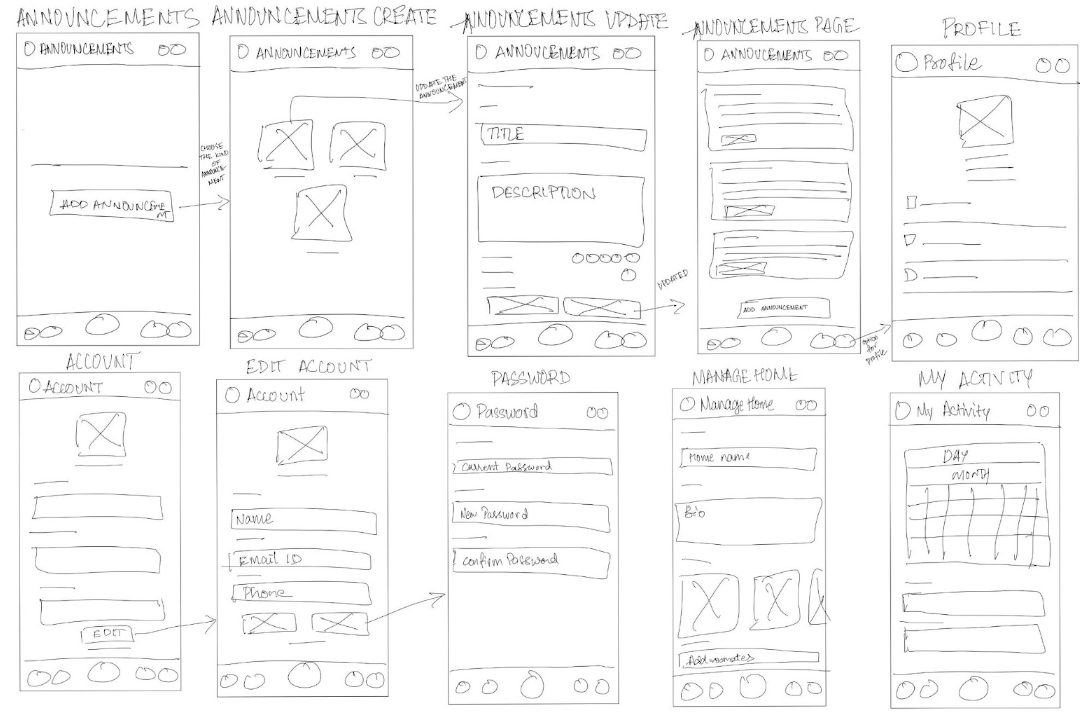
Through ideation and iterative sketching, we designed a mobile app with mood updates, shared task calendars, announcements, and expense tracking.
Usability testing helped us refine flows and visual hierarchy, with 80% of users saying it would improve communication and reduce conflicts.

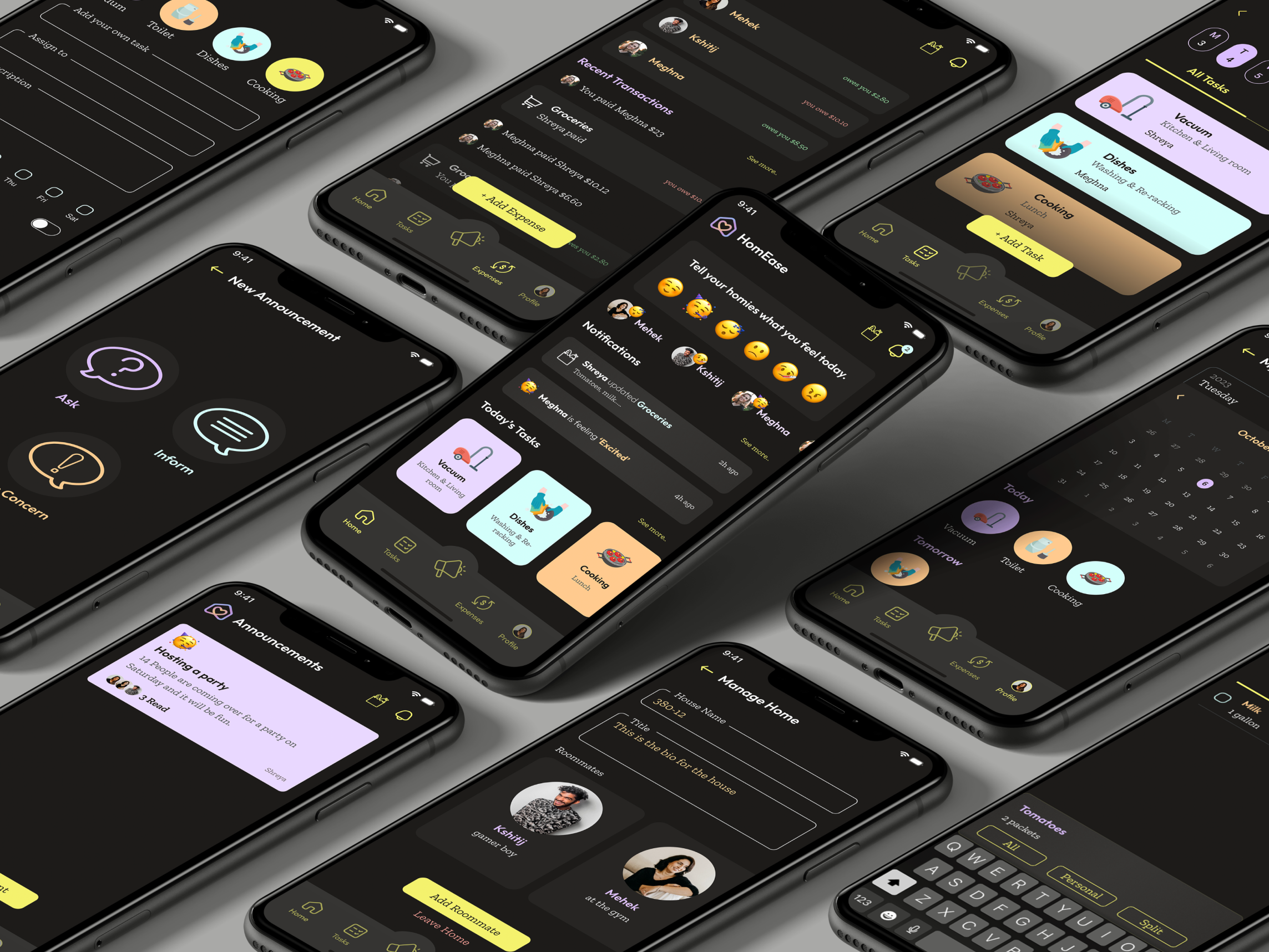
Problem
Living with roommates can be fun, but also frustrating. Miscommunication, unspoken expectations, and messy household management often lead to unnecessary tension. As new graduate students ourself, we had seen and heard of various roommate problems around us.
Initial Goal
At first, we thought the biggest problem was bad roommate matches, so we aimed to design a roommate finding app that helped people find a compatible match.
Design Process
Skip to solutionUnderstand user's pain points & current solutions
Define the user, it's needs and goals
Turn user goals into design features
Design hi-fidelity mockups
Test the design with users
1. User's pain points & current solutions
User Research
We conducted user interviews with students living in shared housing to understand their pain points and daily challenges with roommate communication and household management.
participants
mins interview
open ended questions
Can you share your initial impressions or expectations when you first started living with your roommate(s).
What are some positive aspects of your relationship with your roommate(s)?
Have there been any challenges or conflicts in your relationship, and if so, how have you managed or resolved them?
Do you feel these conflicts could have been avoided? If yes, how?
How much do you typically communicate with your roommate(s)? Through what means? (e.g., in-person, text, notes)
Are there specific communication strategies or ground rules you've established in your living space?
What activities or experiences do you typically share with your roommate(s)?
Have there been any instances where privacy or boundaries became an issue? How was it handled?
Are there any cultural or lifestyle differences between you and your roommate(s) that have influenced your relationship?
How much did you interact with them before moving in?
Can you share your expectations of your roommates from your initial interactions?
Did they live up to your expectations? Explain.
On a scale from 1 to 10, how satisfied are you with your current living arrangement and relationship with your roommate(s)?
If you had a chance to change your roommate(s), would you?
If yes, what would be different about this roommate?
Interview Findings
Most participants did not want to switch roommates. Instead, they wanted a better way to manage their current situation.
Roommate conflicts were not about mismatched personalities but about household mismanagement, like unclear chores, shared expenses, and decision-making struggles. Many had tried using WhatsApp or Google Sheets for organizations and communication but found them inefficient.
"I compromised because confronting was awkward."— Interview Participant
"They changed the house lights without asking me!"— Interview Participant
"She doesn't wash her dishes regularly, I don't like an untidy house."— Interview Participant
"He hosted a house party and I had an exam the next day."— Interview Participant
Revised Goal
After our research, we realized the real problem wasn't finding better roommates, it was helping existing roommates manage their shared household more effectively. We pivoted to design a household management app that centralizes communication, chores, and expenses.
2. Defining the user and it's needs
Affinity Map
- Personality and moods
- Rule Book
- Apps used currently
- Topics of conversation
- Responsibilities
- Time Management and Scheduling
All of this data, but who's the user?

"I have a habit of cooking and I clean the kitchen after, my roommates don't unless reminded many times. We should have set some ground rules, but we didn't.”
Atharva Desai
- Fair distribution of chores
- Focus on studies
- Clean, organized home
- Misunderstandings with roommates
- Unfair chores
- Lack of ground rules

"We sat down to create a list of groceries needed to buy, but it was so boring that we chose to just wing it at Walmart. We ended up spending more and forgetting some stuff.”
Divya Sharma
- Be part of house decisions
- Equal contribution in chores
- Better communication
- Not always included in decisions
- Lack of personal space
- Roommates get lazy with chores
User Needs to Design Goals
Quick and easy communication
Prevents missed updates and reduces misunderstandings between roommates.
Fair distribution and management of chores
Solves frustration from unequal workload and forgotten tasks.
Encourage combined decision-making
Prevents exclusion and confusion around shared household choices.
3. Turn goals into design features
Quick and easy communication
- Can we create a centralized announcement board for all updates?
- Would push notifications help everyone see important messages?
- Should we add a group chat for real-time roommate discussions?
- Could we use read receipts to confirm everyone saw an update?
- How might we make it easy to share urgent information instantly?
Fair distribution and management of chores
- Should we have a shared chore calendar with assignments?
- Would automated reminders help prevent missed tasks?
- Can we visualize progress to motivate everyone?
- How might we rotate chores fairly among roommates?
- Could we let users swap or trade chores easily?
Encourage combined decision-making
- Could we add polls and voting for group decisions?
- Should there be a shared editable house rules document?
- How might we make expense approvals simple for everyone?
- Can we provide a timeline of past group decisions?
- Would anonymous voting help with sensitive topics?
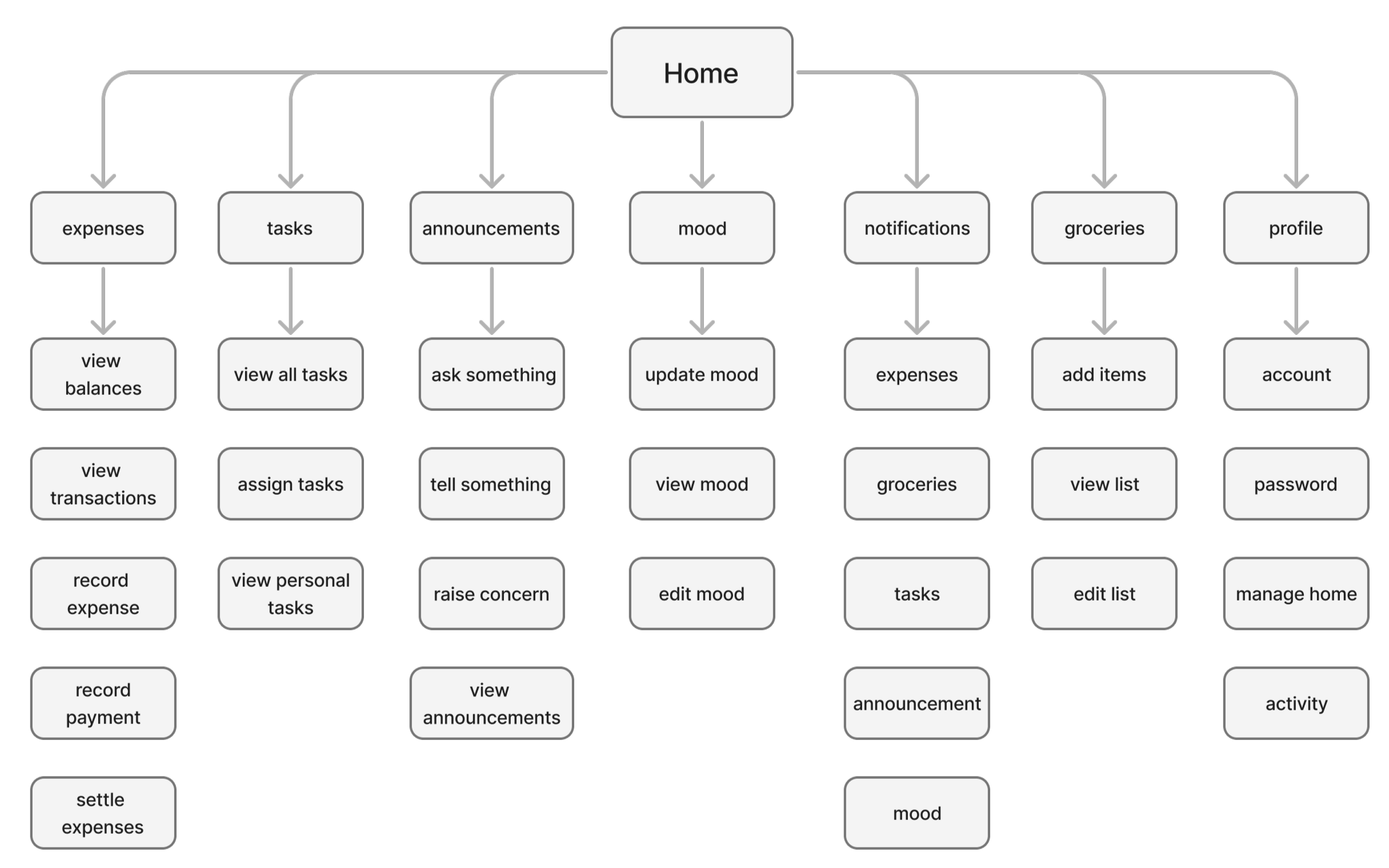
Information Architecture
4. Design solutions & rationale
One-click mood update: Say how you feel when you don't have time to talk.
Goal 1: Quick and easy communication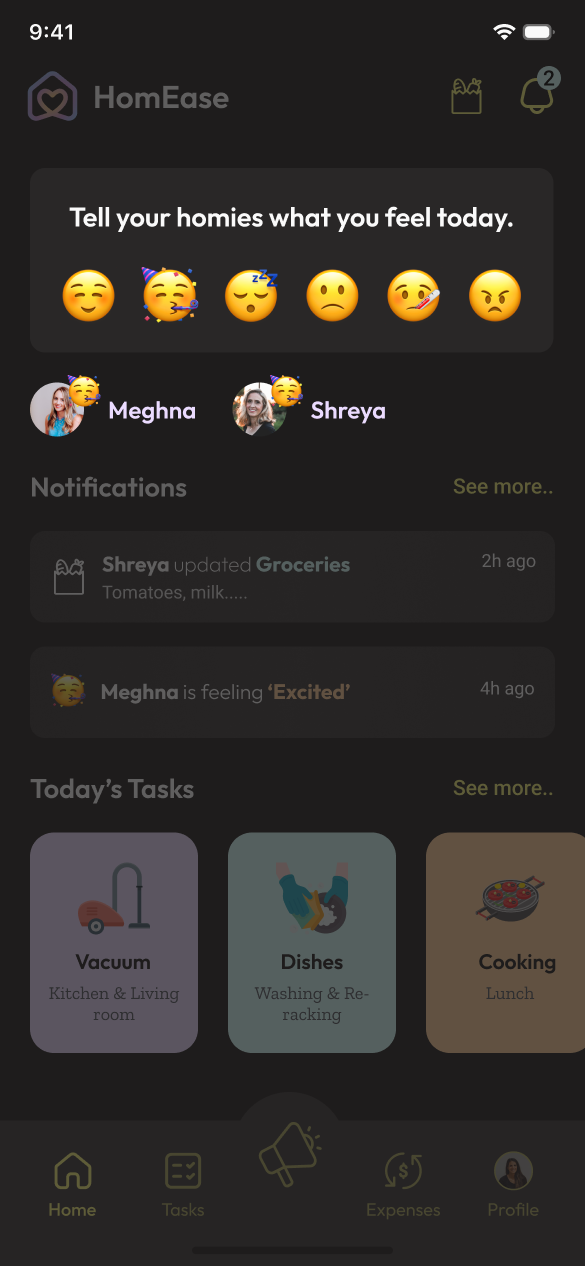
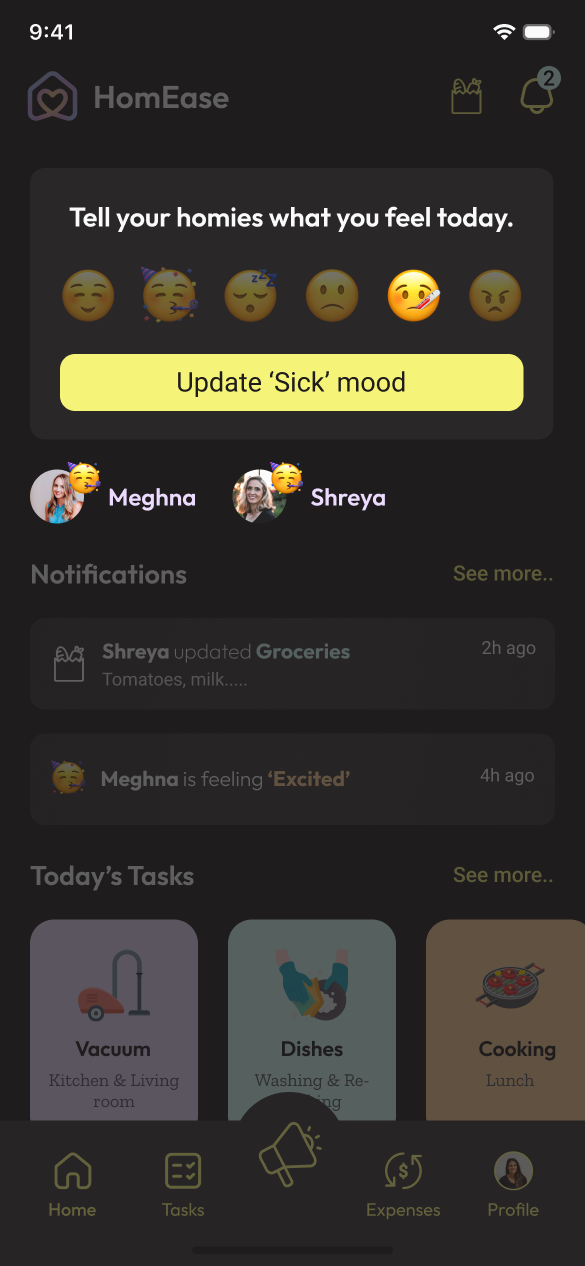
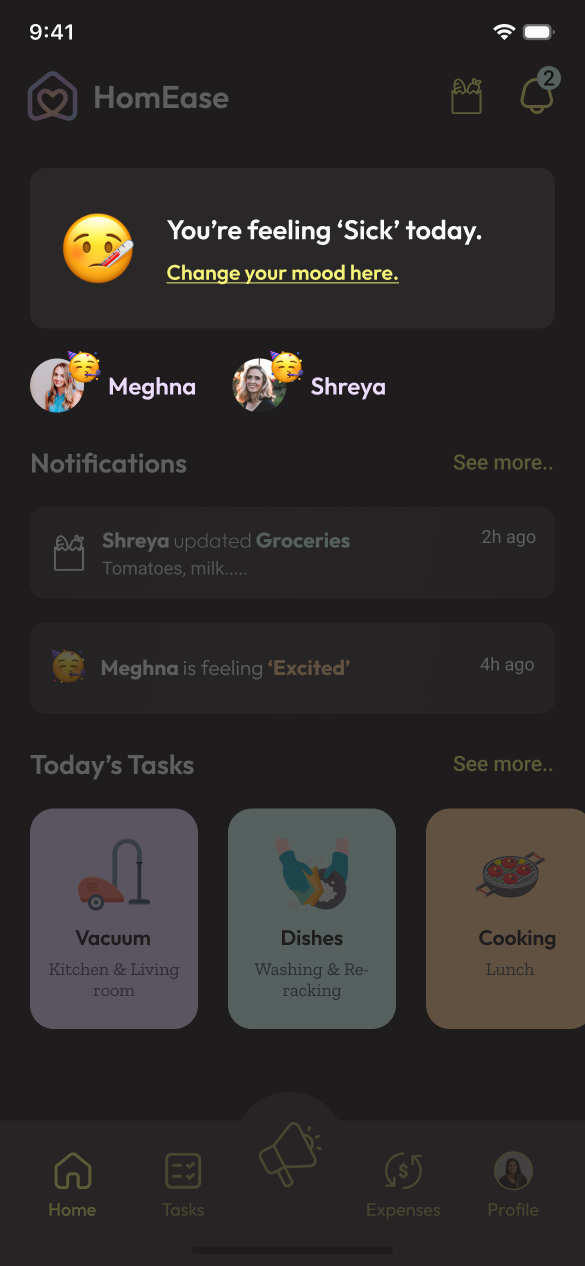
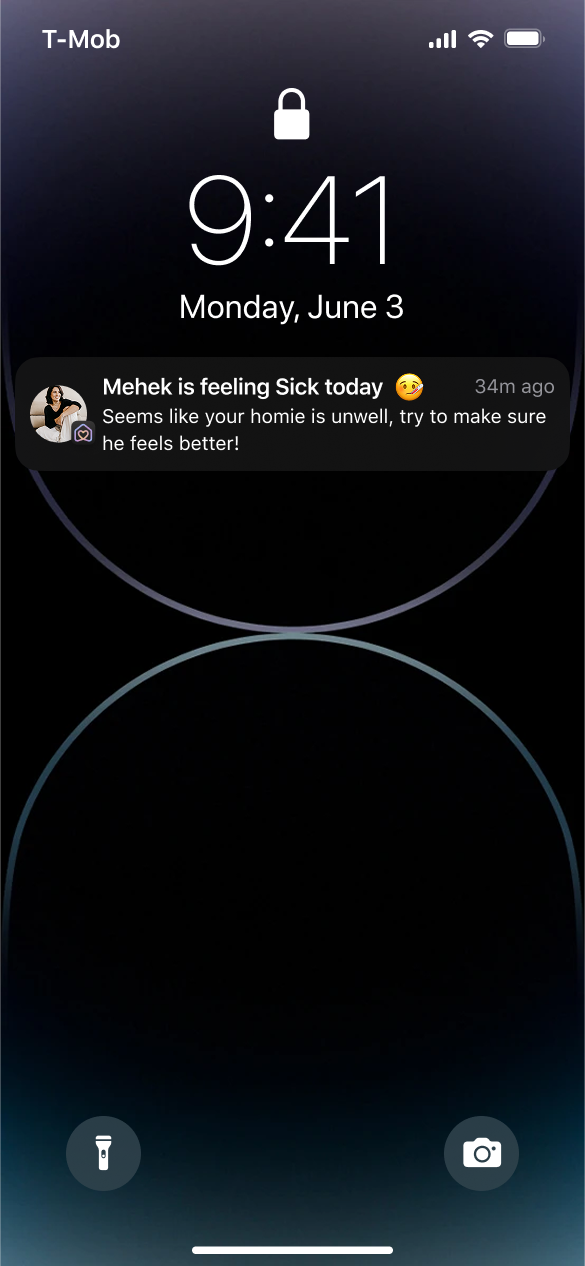
With busy and different schedules, roommates don't always find the time to have basic communication, let alone feelings. This feature is optional, and the mood disappears after 24 hours. Interviews highlighted roommates' hesitation in verbally expressing their feelings and concerns to each other. This non-verbal mode of communication is fast and convenient.
Atharva's frustration with the misunderstandings between his roommates can be improved."I was unwell and my roommate was not aware, she hosted a party at home that I was not comfortable with it"— Interview Response
"I compromised because confronting was awkward"— Interview Response
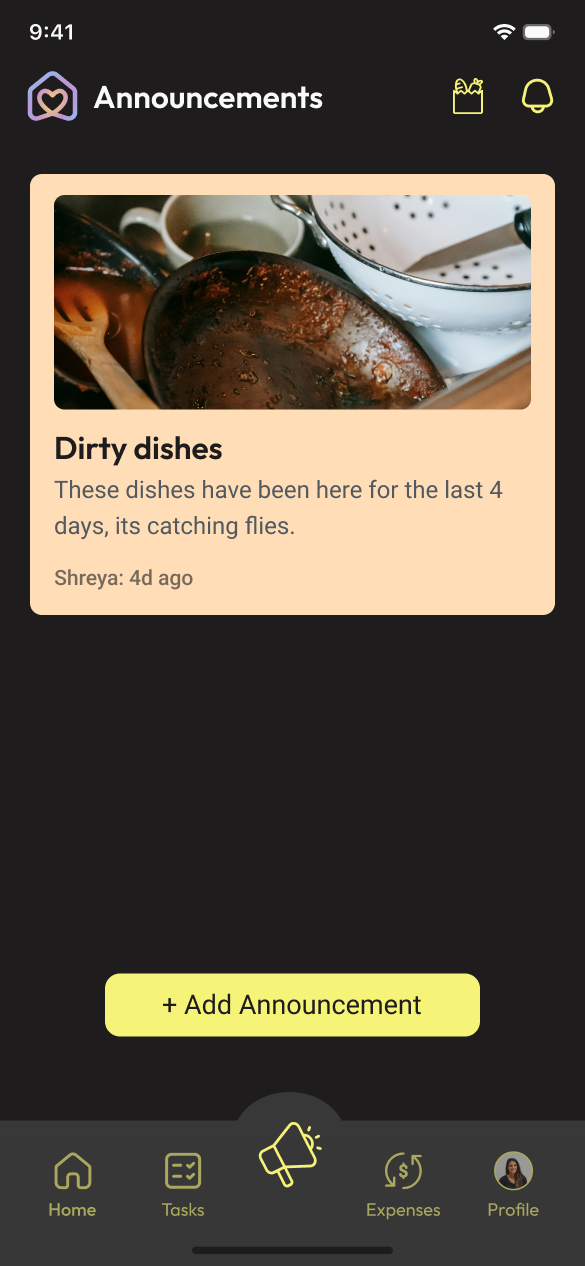
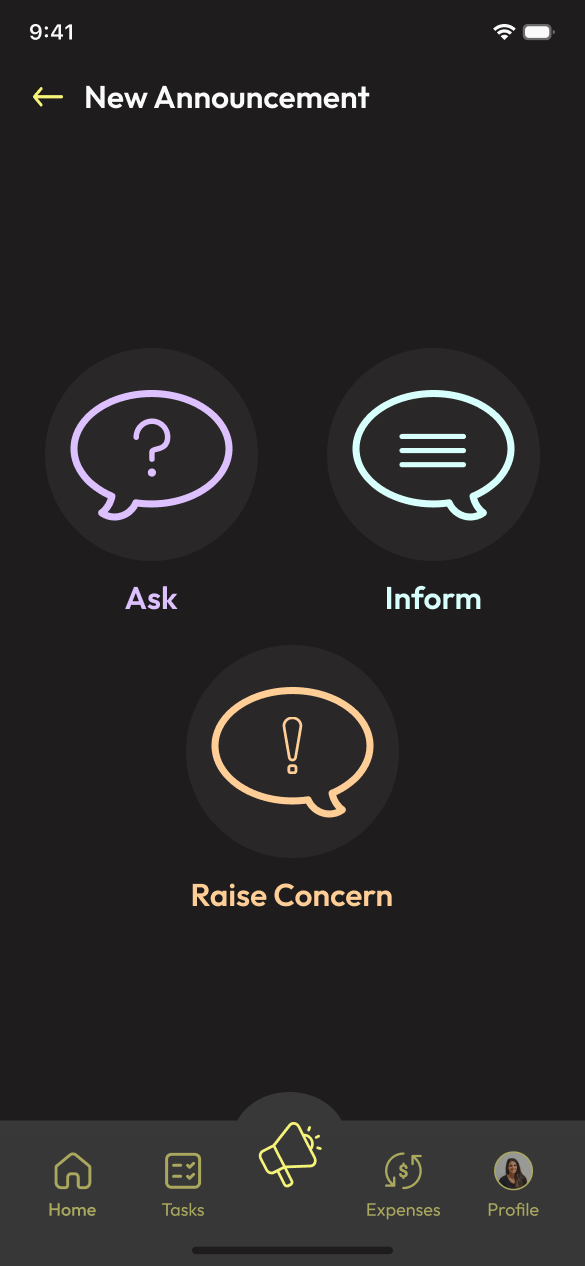
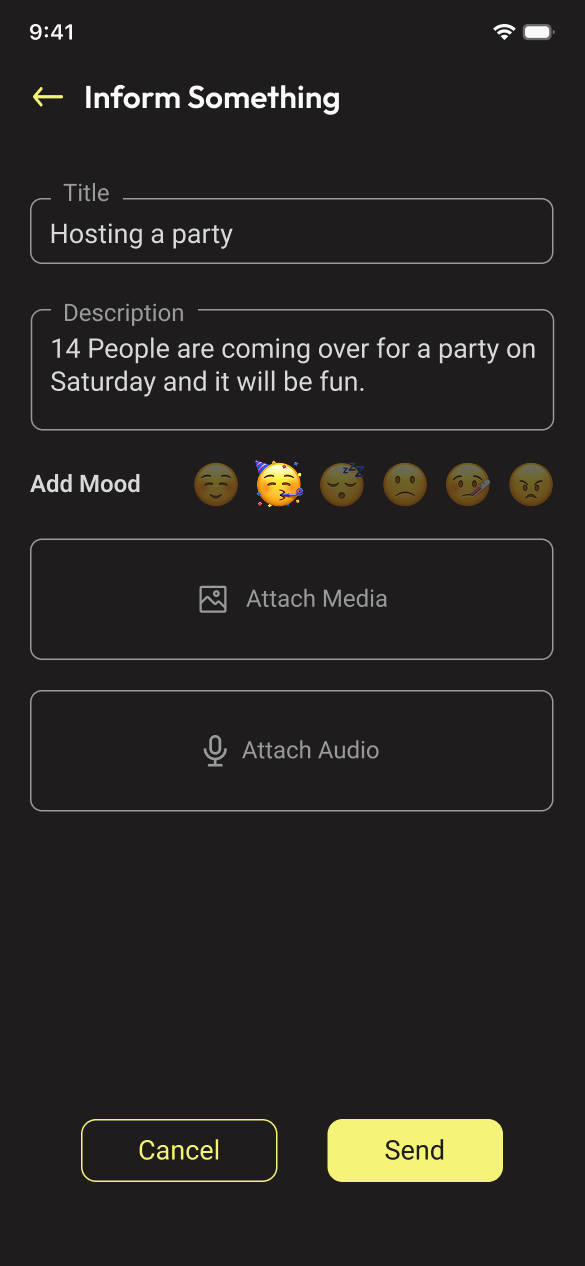
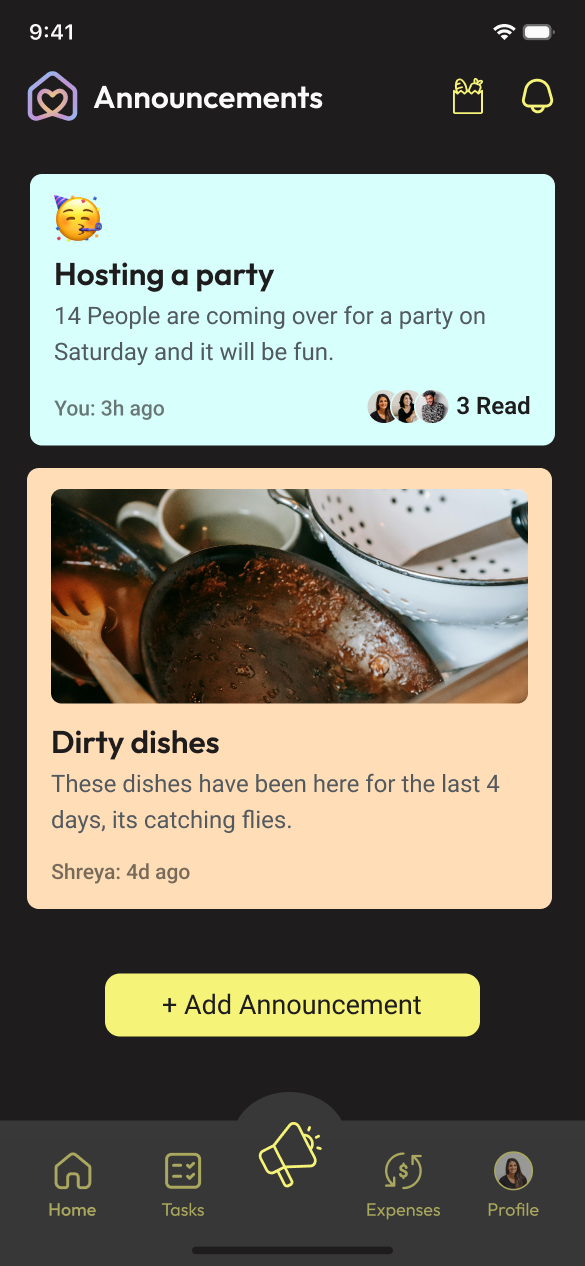
Central announcement board: ask for opinion, inform a decision, or raise a concern.
"They changed the house lights without asking me!"— Interview Response
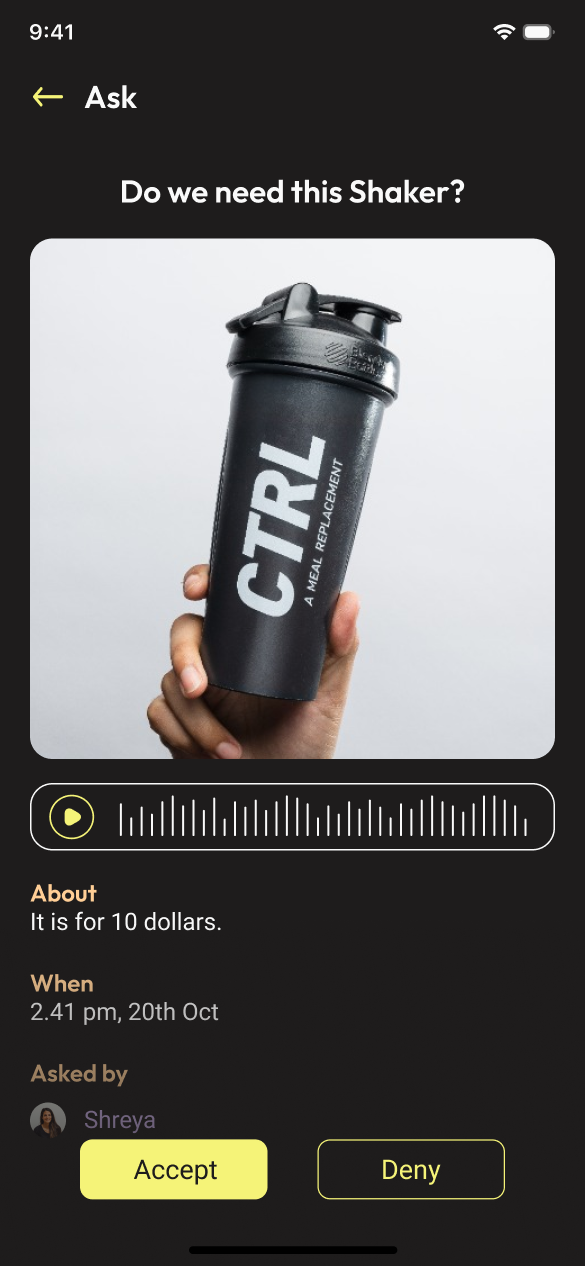
This feature makes it easier for roommates to communicate about shared living matters. Roommates can use Ask to get opinions before making decisions, Inform to share updates or plans, and Raise a Concern to express discomfort or issues using text, images, or emojis. It's a simple way to ensure everyone feels involved and respected, especially when schedules don't align or conversations feel uncomfortable.
Divya can now feel more included in housing decisions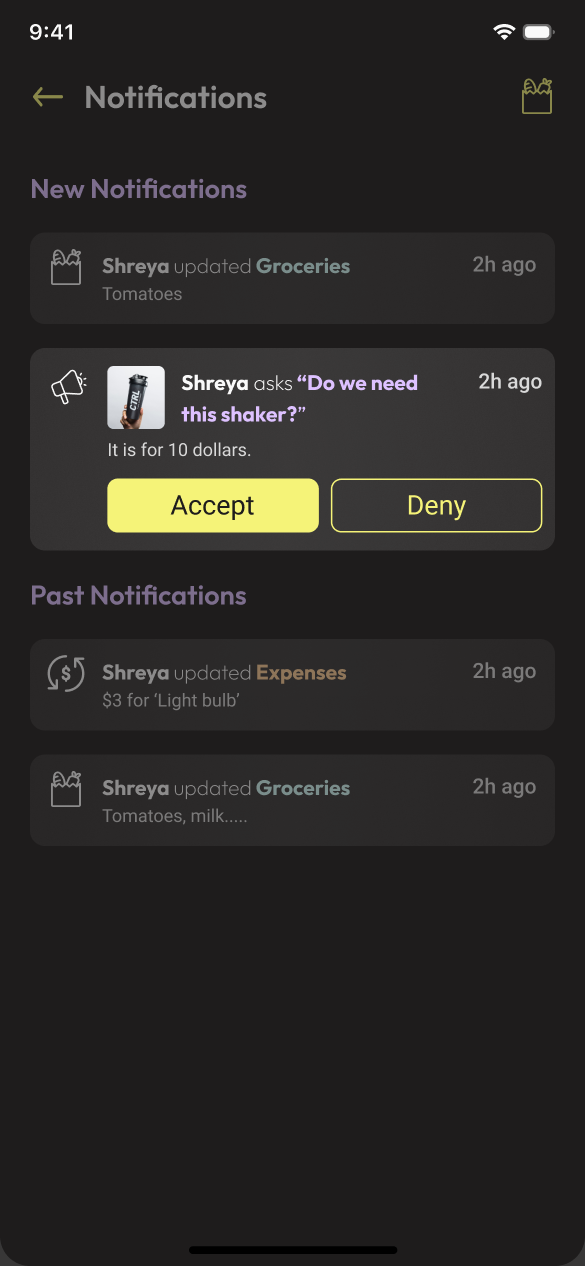
Household task tracker: Clear roles, less conflict.
Goal 2: Fair distribution and management of chores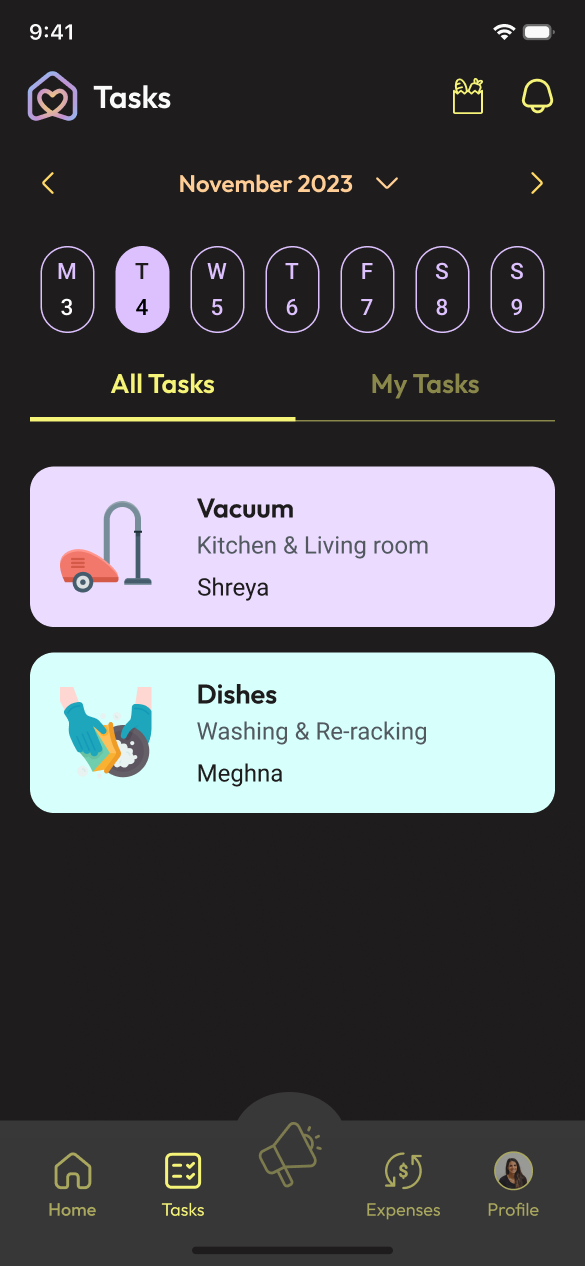
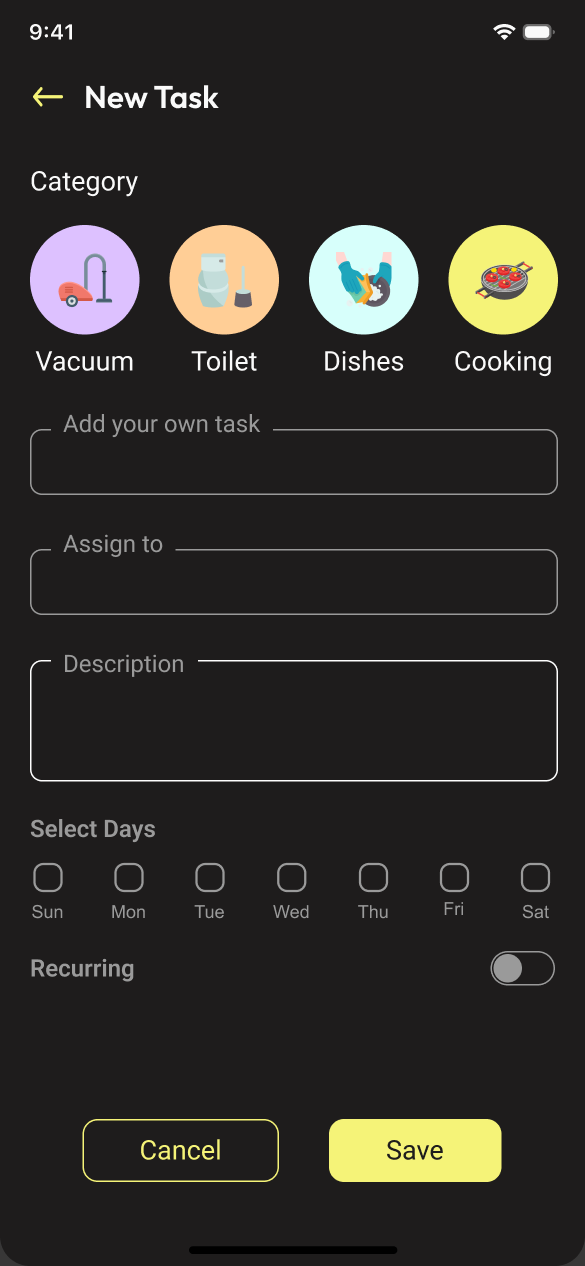
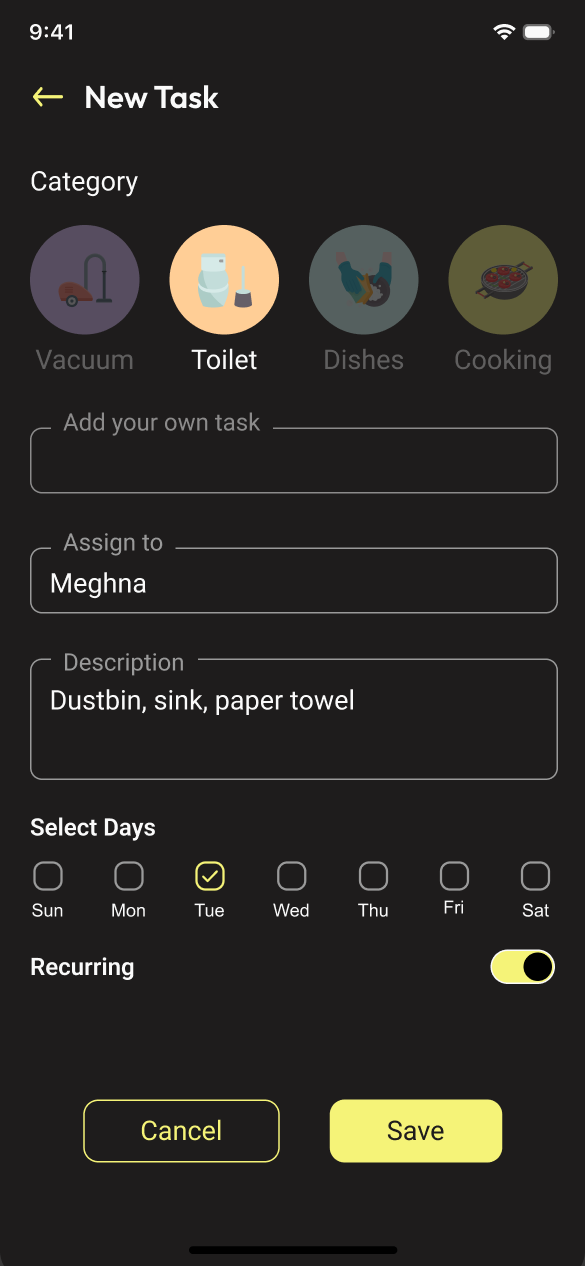
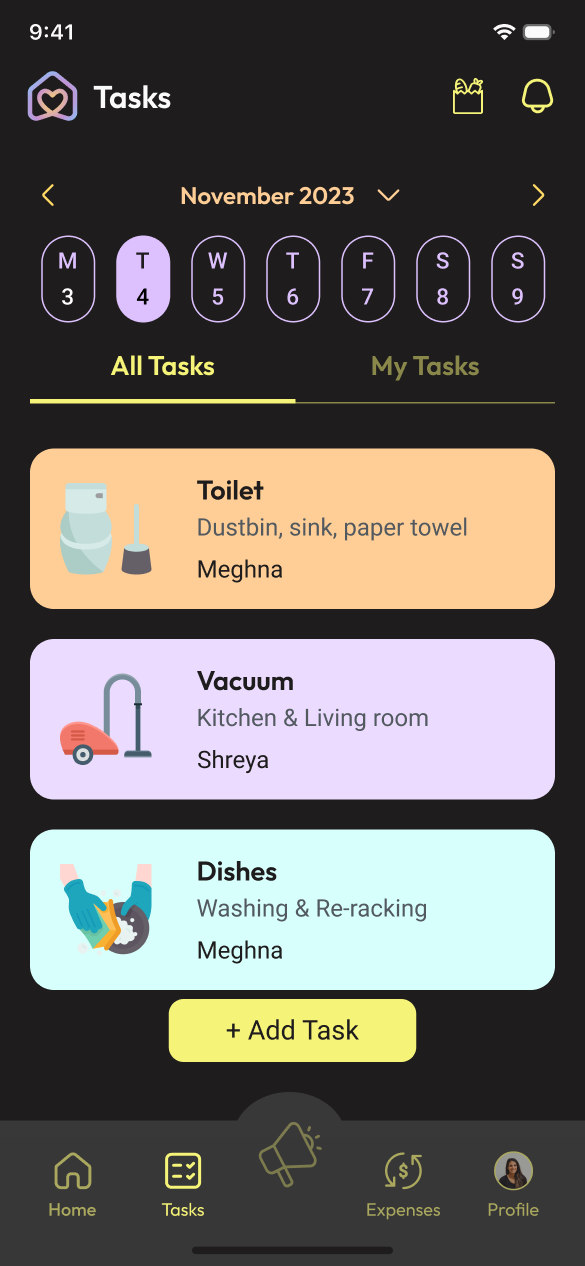
Roommates often relied on whiteboards, sticky notes, or verbal reminders to share chores, methods that were easy to miss or forget. This feature replaces those with a simple digital system where tasks can be assigned, viewed, and managed by everyone in real time. It brings clarity and accountability to household duties, helping ensure a fair distribution of work without awkward reminders or conflicts, so the home runs smoothly and everyone feels responsible.
Atharva can ensure everyone gets equal responsibilities and can hold someone accountable for not fulfilling it."She doesn't wash her dishes regularly, I don't like an untidy house."— Interview Response
Shared grocery list: view, update, and manage shared and personal food purchases
Goal 1: Quick and easy communication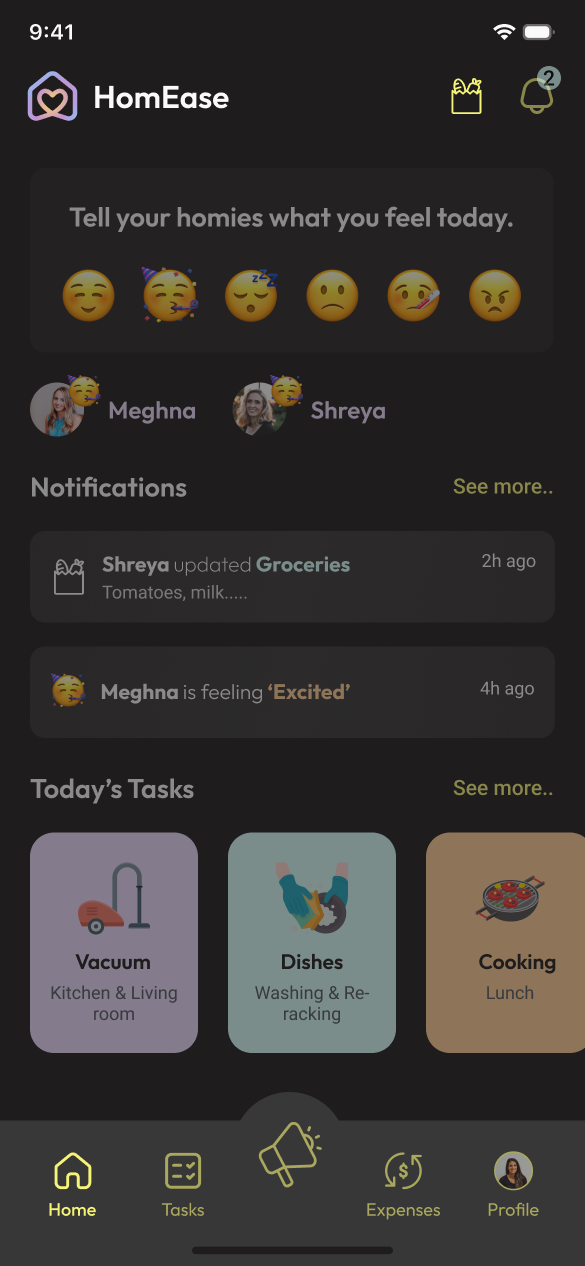
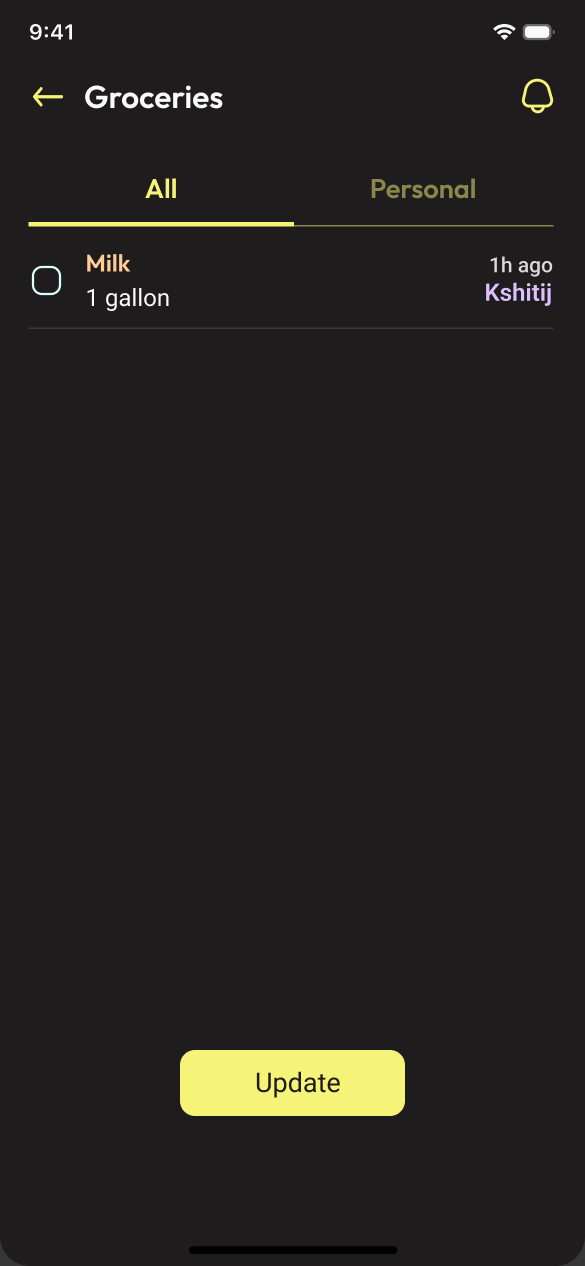
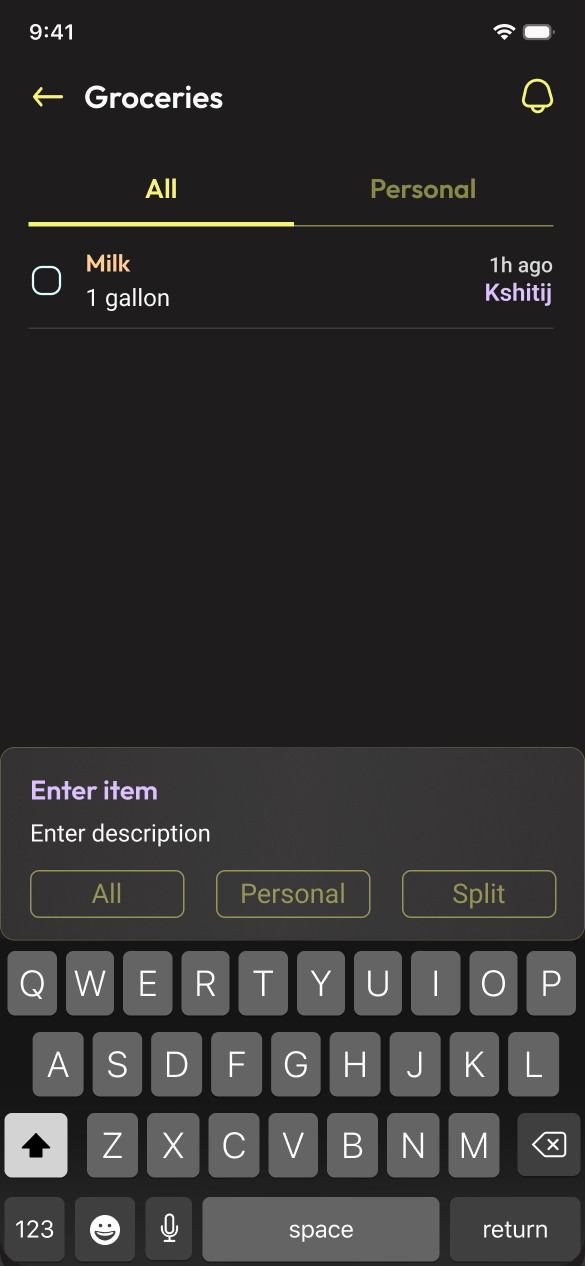
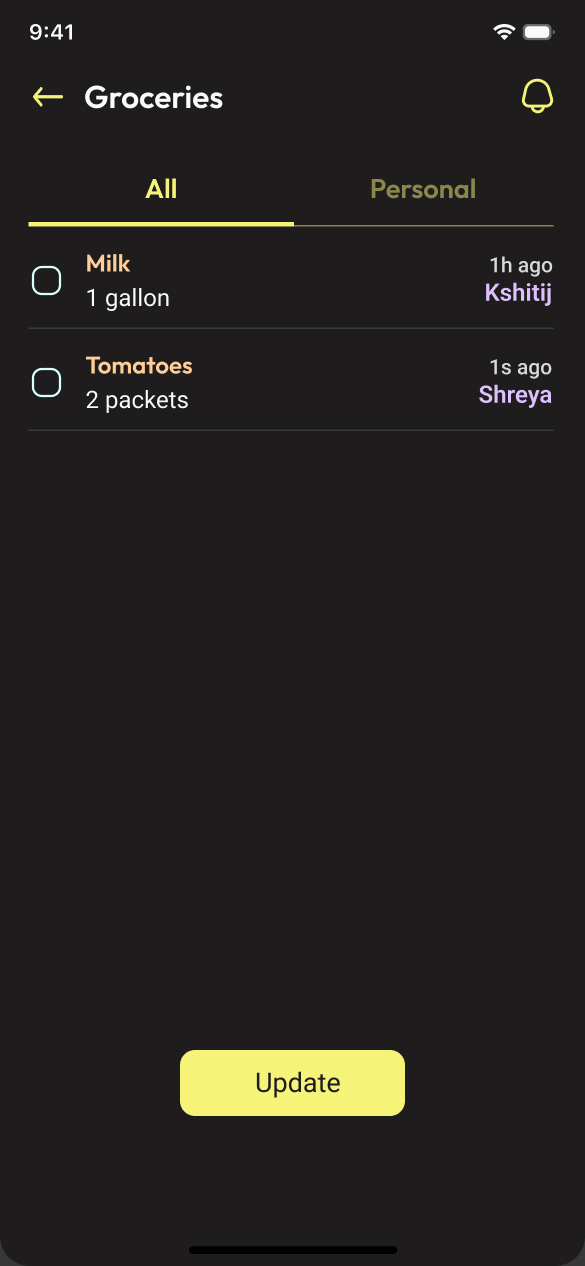
Groceries came up in interviews as one of the most commonly shared responsibilities among roommates. This feature helps manage both personal and shared grocery needs through a simple checklist. Items disappear once purchased, reducing duplication and keeping everyone on the same page. It's an easy way to stay organized, avoid overbuying, and make sure nothing gets missed.
Divya and her roommates can easily manage groceries and avoid overbuying at Walmart."We sat down to create a list of groceries needed to buy, but it was so boring that we chose to just wing it at Walmart. We ended up spending more and forgetting some stuff."— User interview
The Structure Behind the Visuals
5. Testing it with users
Test Plan
As part of the test plan, we started with a pilot test within the team, to identify breaks in the flow, or inconsistencies. After refining minor issues, we formulated a test script, and divided tasks to evaluate each of the features. We sent the prototype link to each participant, and recorded the test session via Zoom. Users were asked to perform tasks, think-out-loud while doing so, and rate their ease of use on a scale of 1 to 5.
participants
scenarios
tasks
Post-task Questions & Analysis
- Overall from 1- 5, how would you rate your total experience with this application?
- Is there anything you would change about the design of this application?
- Is there anything feature you would add or change about this application?
- Are there any comments you would like to add?
Test Results
The verdict: super 'cool', with a little room to grow.
Users found the app fun, intuitive, and packed with useful features like mood updates, personal grocery lists, and recurring tasks. Many described it as self-explanatory and more convenient than similar tools. While the experience was largely positive, testers also shared thoughtful suggestions, such as clearer icons, more visible notifications, and additional customization options like light mode to help make the app even smoother and smarter.
(out of 5) average user rating across all tasks.
% said the app was easy to navigate.
% found announcements useful for staying updated.
% said mood updates would help reduce conflicts.
% liked the recurring tasks for easier long-term coordination.
"Loved the color palette and the features of the app. If this gets published, I would use it. Even the logo of the app is extremely welcoming and it makes me want to come back to the app again in future!"— Test Response
"Some of these features are so cool and useful as a roommate!"— Test Response
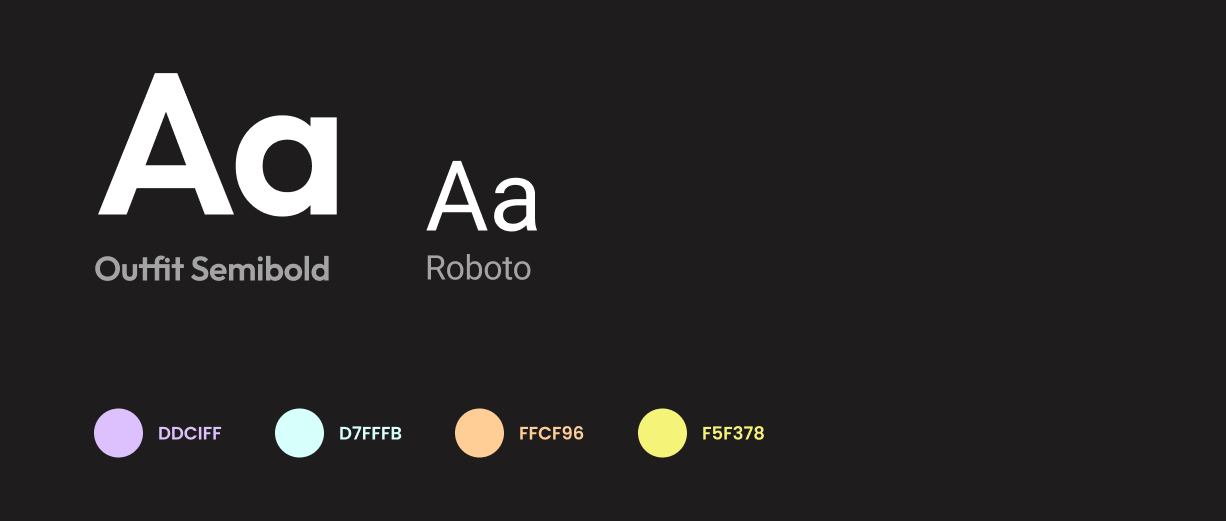
"I love the flow and colors of the app, looks so trendy!"— Test Response
% had trouble recognizing the grocery list icon.
% wanted a way to reject an assigned task, which was not present.
% of users found the "Update" button in groceries unclear.
Reflections
Business Impact
Broader Market Reach
HomEase has the potential to become the go-to roommate management platform, not just for students, but for young professionals and co-living spaces.
New Revenue Streams
A freemium model unlocks monetization opportunities, offering core features for free while charging for premium tools like automated bill-splitting.
Brand Partnerships & Affiliate Income
Integrating with grocery stores allows users to add items directly from partner shops, opening doors for discounts and affiliate earnings.
Ad-Based Monetization
In-app ads and sponsored deals introduce new revenue while offering users relevant promotions on services like cleaning and food delivery.
Enterprise Adoption Potential
Property management integration creates value for landlords, enabling tenant concern tracking and positioning HomEase as a tool for residential operations.
Future Considerations & Next Steps
UI Refresh
Polish the interface with refined visuals, improved contrast, and more consistent components to enhance usability and appeal.
Edge Case Handling
Support households of varying sizes, complex billing cycles, and multi-unit living.
Service Integrations
Plan APIs for utility payments, cleaning services, and grocery delivery partners.
Smarter Personalization
Introduce dashboards that adapt to user behavior, such as suggesting common groceries, reminding about bills, or prompting tasks.